
Are we all Clueless?
We’re obsessed with attraction. Cities, regional governments, and states spend a lot of time and resources working to attract companies and developers to invest in the communities they represent. Economic developers fly off to trade shows and tell manufacturers about their communities, in the hopes they can get them to come pay a visit, fall in love, and hire locals to work for them… living happily ever after.
We’re obsessed with attraction. Cities, regional governments, and states spend a lot of time and resources working to attract companies and developers to invest in the communities they represent. Economic developers fly off to trade shows and tell manufacturers about their communities, in the hopes they can get them to come pay a visit, fall in love, and hire locals to work for them… living happily ever after.

A Missing Middle makeover: Developer Jenifer Acosta takes on flood-impacted property in Midland
Always one to juggle several projects at a time, local developer Jenifer Acosta recently landed her first development effort in Midland.
After a quick call from her realtor and a short diversion from a preschool picnic with her family in tow, Acosta happened to stumble on her next project – Westwood Village, a 10-unit condo development in Midland that was impacted by the dam breaches and subsequent flooding.
Always one to juggle several projects at a time, local developer Jenifer Acosta recently landed her first development effort in Midland.
After a quick call from her realtor and a short diversion from a preschool picnic with her family in tow, Acosta happened to stumble on her next project – Westwood Village, a 10-unit condo development in Midland that was impacted by the dam breaches and subsequent flooding.

How to Buy a Property in 14 Days
As I was wrapping up work and preparing to attend a preschool reunion in the park for my son’s class, I messaged an area realtor inquiring on who was buying homes in flood-affected areas. He mentioned one I should look at and we made plans to meet at a property in 15 minutes. With two kids, my husband, and preschool picnic supplies loaded up we headed to Westwood Village.
As I was wrapping up work and preparing to attend a preschool reunion in the park for my son’s class, I messaged an area realtor inquiring on who was buying homes in flood-affected areas. He mentioned one I should look at and we made plans to meet at a property in 15 minutes. With two kids, my husband, and preschool picnic supplies loaded up we headed to Westwood Village.
Catalytic Community Building
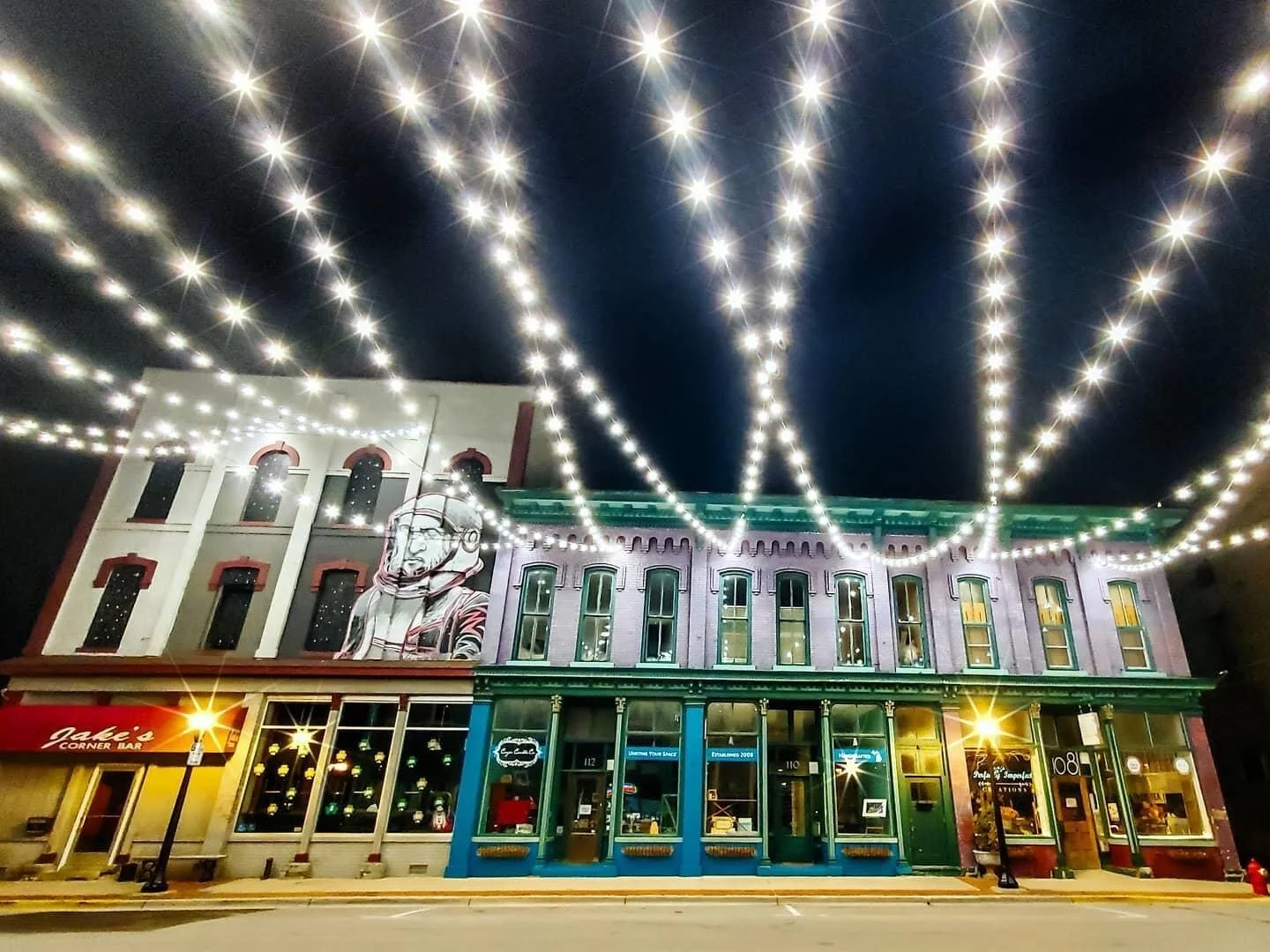
For the last three years, my focus has been redeveloping a 130-year old bank building. Having been vacant for several years, the building was set to be demolished to make way for a drive-thru bank branch at the center of Downtown Bay City, Michigan. Many developers looked at the building and ran the numbers; it had been rumored impossible to save. The building was well kept, but a – some would say misguided – renovation in the 1960s added a midcentury modern panel facade to the upper three floors (covering up an 1890 Romanesque Revival facade), while the lower two levels were reengineered to have a more modern look. The economics didn’t work, and the cost of the project greatly outweighed what it would appraise for once completed.
For the last three years, my focus has been redeveloping a 130-year old bank building. Having been vacant for several years, the building was set to be demolished to make way for a drive-thru bank branch at the center of Downtown Bay City, Michigan. Many developers looked at the building and ran the numbers; it had been rumored impossible to save. The building was well kept, but a – some would say misguided – renovation in the 1960s added a midcentury modern panel facade to the upper three floors (covering up an 1890 Romanesque Revival facade), while the lower two levels were reengineered to have a more modern look. The economics didn’t work, and the cost of the project greatly outweighed what it would appraise for once completed.

Your neighbor is a developer: Small-scale investments in the Great Lakes Bay Region
One of a community’s biggest assets and a catalyst for growth is a familiar, motivated and thoughtful investor.
But where do you look for this person?
Often, you’ll find them in plain sight, or maybe even right next door.
Locally built, maintained and owned
The impact of community-led, locally-owned, small-scale investments stretch far beyond what may initially start out as a small neighbor project. Yes, the multi-million-dollar buildings and sprawling design plans are nice, but the simple projects move the needle too – like a building with two rental units.
One of a community’s biggest assets and a catalyst for growth is a familiar, motivated and thoughtful investor.
But where do you look for this person?
Often, you’ll find them in plain sight, or maybe even right next door.
Locally built, maintained and owned
The impact of community-led, locally-owned, small-scale investments stretch far beyond what may initially start out as a small neighbor project. Yes, the multi-million-dollar buildings and sprawling design plans are nice, but the simple projects move the needle too – like a building with two rental units.

Michigan developer explains how small-scale development transforms a city
“Cities work best when they are built, maintained, and owned primarily by locals.”
That was the message from Michigan real estate developer Jenifer Acosta as she spoke Thursday at an event intended to help regular people develop small residential projects — such as a duplex on a long-vacant lot — in their neighbourhoods.
“Cities work best when they are built, maintained, and owned primarily by locals.”
That was the message from Michigan real estate developer Jenifer Acosta as she spoke Thursday at an event intended to help regular people develop small residential projects — such as a duplex on a long-vacant lot — in their neighbourhoods.

The Culture of Scarcity in Rustbelt Cities
Like so many rustbelt cities, Michigan small towns have been greatly affected by the decline of the manufacturing industry. That’s putting it mildly as vacant buildings, unemployment, and families struggling is entirely commonplace for anyone who has lived in a rustbelt city since manufacturing began declining in the 1970s and 80s. It’s created a culture of scarcity.
Like so many rustbelt cities, Michigan small towns have been greatly affected by the decline of the manufacturing industry. That’s putting it mildly as vacant buildings, unemployment, and families struggling is entirely commonplace for anyone who has lived in a rustbelt city since manufacturing began declining in the 1970s and 80s. It’s created a culture of scarcity.
There’s an undertone of competition that ripples through every facet of community development because of this. A job for you means one less possible job for me. If they get the grant this year, our organization won’t get the funds that were requested. If a new restaurant opens, the one down the street will lose business.
In an interview, Brené Brown once said, “Worrying about scarcity is our culture’s version of post-traumatic stress…. Scarcity thrives in a culture where everyone is hyperaware of lack. Everything from safety and love to money and resources feels restricted or lacking. We spend inordinate amounts of time calculating how much we have, want, and have done, and how much everyone else has, needs, and wants.”
Cultural shifts are no small feat. We have to start thinking of the good our community has to offer and its assets. Asset-based thinking is like the practice of being grateful. It’s replacing a negative mindset with a positive one. Retraining our brains to stop defaulting to deficits, problems, and all we lack. Brené Brown’s work details how recovering from scarcity involves a willingness to own our vulnerabilities and ability to engage with the world from a place of worthiness.
Focus on what you’re excited about in your town. Talk about your favorite places, experiences, and enjoy them. Thank business owners who get it. See it through someone else’s perspective. My husband is a Miami native. Born & raised in one of the most transient and tourist oriented areas. His first trip to Michigan, someone thanked him for holding open a door for her. He was BLOWN AWAY. Excitedly, he told me how great that was and that it hasn’t happened to him in years. In. Years. He hadn’t been offered a thank your for a simple act. Midwestern kindness and respect for others is something we value in our house.
Get to know your community better if you want to help change the culture. What are the major employers looking for? What is the strategic plan for community giving at your local foundation? Volunteer for an organization you believe in and offer them support through your time.
It’s entirely possible to change the culture of scarcity. Local leadership programs are a fantastic place to start. It’s a great way to get new hires involved and invested in their new community as well. The Great Lakes Bay Regional Alliance’s Institute for leaders does this incredibly well (they are currently taking applications for the Class of 2020).
Shifting from a culture of scarcity to an asset-based mindset will happen more quickly if more of us work on it together. Positivity can be as contagious as negativity.

Getting sh*t done: Lady developers edition
Three women developers from across the US are helping to bring back their home cities.
I am not a developer and I have never been a developer, however, the beauty of CNU is that it provides a well-rounded liberal arts education on urbanism—you can still take a class in a subject even if you’re not going to major in it.
At CNU 26 in Savannah,I dipped a toe into the development pond when I attended the Rapid-Fire Stools-by-the-Pool with Developers chat, and for the first time in my life thought kindly of developers, yet I couldn’t help but wonder, while I was listening to seven white men in a row talk about community engagement, where the female, non-binary, LGBTQ+, and developers of color were. So,when I saw the session Less Talk, More Rock: Getting Sh*t Actually Done—The Lady Developer Edition at CNU 27 in Louisville, I made it a priority to attend.
Three women developers from across the US are helping to bring back their home cities.
I am not a developer and I have never been a developer, however, the beauty of CNU is that it provides a well-rounded liberal arts education on urbanism—you can still take a class in a subject even if you’re not going to major in it.
At CNU 26 in Savannah,I dipped a toe into the development pond when I attended the Rapid-Fire Stools-by-the-Pool with Developers chat, and for the first time in my life thought kindly of developers, yet I couldn’t help but wonder, while I was listening to seven white men in a row talk about community engagement, where the female, non-binary, LGBTQ+, and developers of color were. So,when I saw the session Less Talk, More Rock: Getting Sh*t Actually Done—The Lady Developer Edition at CNU 27 in Louisville, I made it a priority to attend.
When I enter the room, t-10 minutes to the start of the session, it is already full of chatter. The panel—Bernice Radle, Allison Thurmond-Quinlan, and Jenifer Acosta—are joking around with each other, the holy name of Beyonce is invoked twice inside of a minute, and from the back of the room Allison’s three-month-old, immune to her father’s arm rock, is testing her lung capacity. Three-quarters of the seats in the room are already filled. The vibe is less like a conference than a holiday party. The speakers’ infectious energy has everyone at ease and it’s easy to see how these three rockstar women are wildly popular and effective developers in their hometowns. In fact, they make community engagement look effortless.