
5 Women Changing the Real Estate Industry
When it comes to real estate, the split between male and female realtors might appear fairly equal in residential brokerages — but the majority of real estate leaders, managers, and developers remain largely male, and largely white. In New York, for example, the majority of women in leadership positions at development firms are typically the daughters of New York real estate moguls.
There seems to be a barrier to entering the upper echelons of real estate management for the majority of women.
In celebration of the women out there breaking glass ceilings, here is just a short list of some of the incredible women in real estate who are changing the face of the industry.
When it comes to real estate, the split between male and female realtors might appear fairly equal in residential brokerages — but the majority of real estate leaders, managers, and developers remain largely male, and largely white. In New York, for example, the majority of women in leadership positions at development firms are typically the daughters of New York real estate moguls.
There seems to be a barrier to entering the upper echelons of real estate management for the majority of women.
In celebration of the women out there breaking glass ceilings, here is just a short list of some of the incredible women in real estate who are changing the face of the industry.

Neighborhood Challenge Plan: Grove Park
This work was done, in response to The Neighborhood Challenge and a need for a Neighborhood Revitalization Strategy recommended by the Housing Analysis for Midland County, Michigan 2018 by czbLLC. An analysis was completed for a specific neighborhood section, asking the question, “ Why is there private investment not occurring in the neighborhood to sustain it, and are there ways to create investment momentum to restore struggling neighborhoods to their former glory?” It is our view that we should get started, target a neighborhood to improve and pilot concepts, then scale to other parts of the city, we are now seeking input on the intention, recommendations and concepts.
Principles of Intervention | The Neighborhood Challenge
1. Keep good owners in their homes or create new good owners where possible
2. Undertake programming to increase home ownership where it makes sense
3. Regulate and support rental properties to provide quality housing to low-income renters
Objective
This work was done, in response to The Neighborhood Challenge and a need for a Neighborhood Revitalization Strategy recommended by the Housing Analysis for Midland County, Michigan 2018 by czbLLC. An analysis was completed for a specific neighborhood section, asking the question, “ Why is there private investment not occurring in the neighborhood to sustain it, and are there ways to create investment momentum to restore struggling neighborhoods to their former glory?” It is our view that we should get started, target a neighborhood to improve and pilot concepts, then scale to other parts of the city, we are now seeking input on the intention, recommendations and concepts.
Principles of Intervention | The Neighborhood Challenge
1. Keep good owners in their homes or create new good owners where possible
2. Undertake programming to increase home ownership where it makes sense
3. Regulate and support rental properties to provide quality housing to low-income renters
Neighborhood Overview
The 8-block area that lies directly between Grove Park and Indian Street was selected as the focal point for this pilot revitalization strategy.
Located within the first outer ring from downtown, the houses range from well-maintained clearly owner-occupied homes to neglected in maintenance clearly low-quality rental units and in one instance abandoned to decay. “Many older neighborhoods in Midland are now losing homeowners and experiencing an increase in poverty as lower income households move in.” This excerpt from CZB LLC in the 2018 Midland Housing analysis summarizes their findings of interior neighborhoods in Midland that have suffered from being older and smaller have become unmarketable due to limited demand and have become the de facto affordable housing solution for poor households. The average sale price per square foot in this 8-block area is $63.24 in the last 12 months. The broader Midtown Midland neighborhood to the northeast has averaged a sale price of $80.93 per square foot, this reinforces that that the property values are suffering within this neighborhood section.
Strategic Concepts to Improve the Grove Park Neighborhood
- 1 - Fight Blight
As a first step to improve neighborhood pride, creating and communicating a zero tolerance policy for blight and a positive methodology for code enforcement will help achieve the principles for neighborhood intervention. To start, having a city staff attend a Midtown Midland Neighborhood Association meeting with a flyer or takeaway on what constitutes blight and what actions residents can take to report it to the city for their review.
The city could then perform an “operation clean sweep.” This innovative program has been taking place in Warren, Michigan successfully for 10 years. The program operates in the following way, a brochure is sent to a designated neighborhood telling them a ‘clean sweep’ will be occurring on a particular day giving them a notice to clean up potential violations and avoid fines. It also lists what violations staff will be looking for. These clean sweeps can be performed by specialized city staff in blight or by volunteers of any department that take a day out of the office once a quarter. Building pride takes effort and keeping instances of blight to a minimum will increase community pride over time.
- 2 - Owner-Occupied Renovations
The priority here shifts to encouraging and incentivizing owner-occupied single-family homes. The Michigan State Housing Development Authority Neighborhood Enhancement Programprovides funding to nonprofits statewide for activities directly relating to stabilization and enhancement of neighborhoods. The intent is to fund tangible housing-oriented activities that are: implementation ready; highly visible; impactful to the neighborhood and resident’s quality of life; holistically/community focused; and where there is buy-in and demonstrated support within the neighborhood and community. Each community is eligible for up to $50,000 to provide direct home improvements for eligible activities to owner-occupied homes of residents at or below 80% of the area median income. This program is designed to build the value of homes. If successful during this pilot, the program could be continued through the support of a local foundation.
In addition to finding incentives for current residents, utilizing local mortgage programs that fit the target market in this neighborhood, namely first-time home buyers, veterans, USDA rural programs, and rehab incentives from local banks are also an option. Making sure these options are communicated to realtors that can informs potential buyers within this neighborhood is critical. Many of the homes are older and need repairs, therefore having the right loan programs that provide new buyers the financial capacity could make a difference in attracting new owners that will strengthen the neighborhood.
- 3 - Missing Middle Housing
Missing middle housing is essential to a community. It adds quality residential rentals at attainable prices and are typically owned by local citizens who choose to invest in their community’s neighborhoods. The additional residential density would make progress in the pursuit of raising property values within the neighborhood for current residents by giving owners more equity in their currently owned assets – reversing the tide of depreciation. Having more residents with convenient access to support local businesses helps entrepreneurs and suplies the city with sales tax revenue.
Much like the rest of the country, Midland doesn’t currently have medium density options that are in proximity to downtown and walkable. The incorporation of duplexes, triplexes, fourplexes, and accessory dwelling units would blend into the existing single and dual-story fabric of this neighborhood and be non-disruptive to the overall scale, context, and character that exists currently. Because this particular neighborhood area is within the first distinct ring from downtown it’s ideal for a slightly higher density missing middle housing options. These provide housing options that are often at very attainable price points for young families, seniors, health concious persons who want a walkable/bikeable lifestyle, young professionals, and multigenerational households.
Barriers to Overcome
· A municipal review regarding code enforcement, blight, current processes, and implementation of improved/new practices
· Receipt of a neighborhood enhancement program award will surely be competitive and efforts should be made to ensure the application and communication with MSHDA is as strong as possible
· Access to residential loans and programs available, bank programs to build credit, and encouraging pathways to finance investments
· Missing middle housing is functionally illegal in this neighborhood. Reviewing and revising the zoning and planning ordinances would be necessary to encourage quality housing investments as of right on vacant land.

Big Small Development
A colleague once called me a big small developer – as in I do really big projects for a small developer – I was taken aback immediately. …Like yeah I’m really not a big developer. You see, I strongly identify as a small scale developer. An entrepreneur. I’m scrappy. I have an underdog mentality. I know nothing will be handed to me without a ton of hard work. And I fight like hell for projects I believe can make an impact in the community that raised me and that my husband and I are raising our children in.
A colleague once called me a big small developer – as in I do really big projects for a small developer – I was taken aback immediately. …Like yeah I’m really not a big developer. You see, I strongly identify as a small scale developer. An entrepreneur. I’m scrappy. I have an underdog mentality. I know nothing will be handed to me without a ton of hard work. And I fight like hell for projects I believe can make an impact in the community that raised me and that my husband and I are raising our children in.
I take on projects that are bigger – really just more complicated to make work – then where a small developer optimally operates. You know the vacant historic buildings that need $6 million in gap financing real quick before the wrecking ball shows up. The ones that need someone to fight for their potential value and be crazy enough to find a way to make it work. Since they are so long, slow, and complicated, my lovely historic headaches, it became apparent that a career of only adaptive reuse would burn me out quickly.
And in the pursuit of balance I also develop missing middle housing on neighborhood infill sites and consult with property owners on how to activate their uppers and renovate their buildings for a return. Two years ago while discussing the potential of eleven thirteen center I told R John Anderson, “Oh well new construction and a large site it should be fairly simple and easy.” He looked at me and said, “Ms. Acosta simple and easy are two different things. I had a simple plan to meet a woman, marry her, and live happily. You are sitting next to my third wife. Simple and easy are not the same.” Of course his wife Eleanor gave me the look of “Yep this is true” and surely my path forward with missing middle housing even though they are simple buildings has been anything but easy and presents a variety of different challenges compared to adaptive reuse.
There’s nothing in particular that makes me a unicorn in doing this; I’m simply a homecomer who wants to make a positive impact in my community and loves how the built environment can positively reflect a town. As a small-scale developer or a Big Small one, it’s really all about wanting to improve my community. It’s worth the brain damage and fighting like hell to make it a better place; slightly stronger and more resilient one property at a time.
-jen

Why does the Great Lakes Bay Region need a community development organization? | Jenifer Acosta
Two years ago I was in Detroit, sitting in a leadership program dedicated to responsible land use and community leadership. A panelist dropped a simple sentence, “When Detroit’s renaissance began there were 4 community development organizations, now there are 16, each dedicated to the priorities of the neighborhoods they serve.” Immediately, I began to think how this collaboration and advocacy has been the true catalyst driving Detroit. You cannot change anyone, let alone a group or community, that isn’t ready or doesn’t find value in what you’re offering. As the city saw growth in some neighborhoods, others with different needs and goals banded together in pursuit of their own progress.
Two years ago I was in Detroit, sitting in a leadership program dedicated to responsible land use and community leadership. A panelist dropped a simple sentence, “When Detroit’s renaissance began there were 4 community development organizations, now there are 16, each dedicated to the priorities of the neighborhoods they serve.” Immediately, I began to think how this collaboration and advocacy has been the true catalyst driving Detroit. You cannot change anyone, let alone a group or community, that isn’t ready or doesn’t find value in what you’re offering. As the city saw growth in some neighborhoods, others with different needs and goals banded together in pursuit of their own progress.
As the panelists continued and rotated, Cari Easterday took the floor and talked about Midtown Detroit, and how their organization helps small business owners, difficult development projects, and advocates for the financing to make them a reality (side note: Cari is genius and I hope to be half the finance guru she is). When I was working on the capital stack to save the Crapo Building from demolition, I put in grueling hours and took on meeting after meeting with anyone and everyone who would listen. I remember cold calling Community Development Financial Institutions asking if they had any new market allocations and a soft spot for historic buildings in small towns. I felt like such an underdog and vowed that if I grew into the leader I wanted to be, I would make sure to find paths and advocate for others to build their capacity to make a positive impact.
Now, I hear NO a lot..... A LOT.
When I started talking about the concept of a Community Development Organization (CDO) to serve the Great Lakes Bay Region, I heard a lot more interest from colleagues and questions of how it would work and benefit us. The group of incredible professionals who have given their free time and energy to this organization showcases how ready our region is for positive change and collaboration.
Here’s my “why”:
Competition: Community development requires a lot of public-private partnerships. If you aren’t as strong or capable as other communities across the state, those other communities will gladly take and execute projects with state, federal, and foundation dollars. Here’s the thing, these groups want to invest and help our region but if we can’t prove our ability to execute and innovate they aren’t going to take the risk. I don’t blame them.
Advocacy and collaboration is the basis for correcting this gap. We can build up one another. Advocate for ventures and plans. Strengthen new ventures and have a solid network of advocates who have offered guidance. If we cooperate locally and compete at a higher platform, we all win.
Talent: Every city and company is in need of professionals to fill their employment vacancies. Talented professionals want place. If we can create great places in our communities, it makes it easier for our companies to attract talent. More people and more places inside our downtowns, midtowns and cities across the region help to rebuild and stabilize our municipalities’ tax base.
Every project I’ve worked on, our teams proudly hire local companies as often as possible. This goes far beyond construction. We use local accountants, lawyers, realtors, graphic designers, interior designers, product suppliers, architects, and engineers. This accounts for millions of dollars in local investment. Having a steady stream of work and demand will help local and statewide companies choose to open offices in our communities. They will invest in employees and reinvest to broaden their skills. I want my law firm to have a need to train younger associates in these fields rather than expect us to hire firms in Detroit and Grand Rapids. I want the fees to go to my friends and stay here. I want them to spend it at local boutiques and restaurants.
Capital Flight: Did you know that a good amount of the money earned here in our region, gets invested elsewhere? People make good money here but they don’t consider our region a safe bet. I serve on boards with property owners who invest money in out of state properties and refuse to put a dime into the buildings they own around the corner. It’s easier to buy stocks or invest in a REIT that puts your money to work for you elsewhere. What if you had the option to make as good of return, or maybe more, while making a difference in your neighborhood instead?
These are some sizable motivators and progress doesn’t occur quickly, but we’ve designed a lean organization dedicated to overcoming these issues and more. We hope to continue making great community development so that our region as a whole can do well for itself by doing more good in our neighborhoods.
Historic Bay City bank building reopens and apartments are going fast
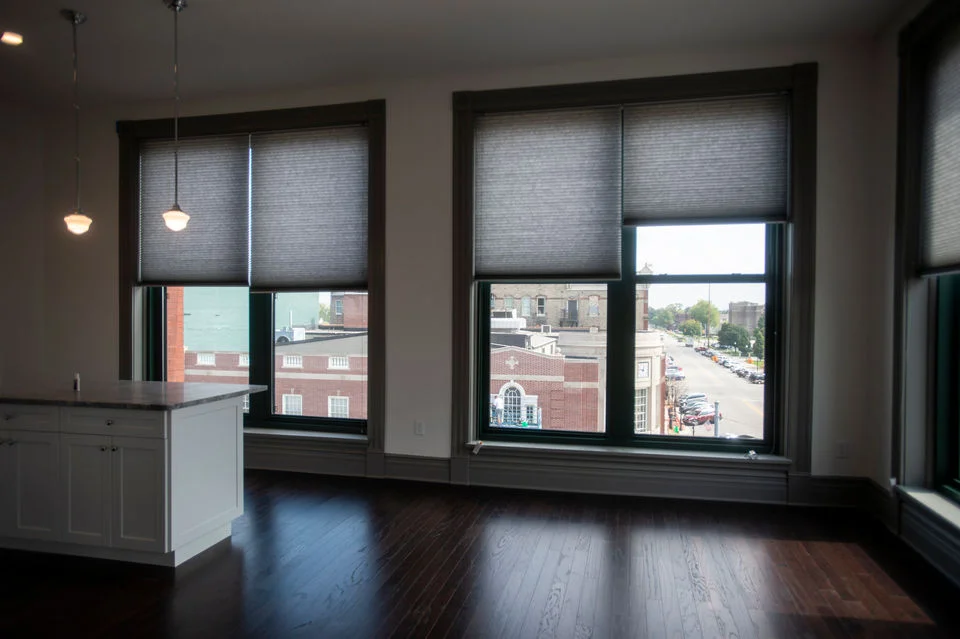
BAY CITY, MI -- The doors to a historic building in downtown Bay City are open again after a nearly three year redevelopment project transformed the building into a multi-use structure with restaurant, commercial and residential space.
BAY CITY, MI -- The doors to a historic building in downtown Bay City are open again after a nearly three year redevelopment project transformed the building into a multi-use structure with restaurant, commercial and residential space.

News Release: City of Bay City awarded Brownfield Grant to redevelop 1113 Center Avenue
City of Bay City awarded Brownfield Grant to redevelop 1113 Center Avenue
Bay City, Mich. After sitting vacant for over a decade, a contaminated lot in Bay City will be returned to productive use with help from the Michigan Department of Environmental Quality (MDEQ). A $200,000 Brownfield Redevelopment Grant was awarded to the city to revitalize the former Fletcher’s Marathon filling station property located in the Center Avenue Historic District.
The MDEQ brownfield grant will assess and mitigate environmental contamination and demolish the gas station’s foundation and pavement that remains from the previously demolished building.
City of Bay City awarded Brownfield Grant to redevelop 1113 Center Avenue
Bay City, Mich. After sitting vacant for over a decade, a contaminated lot in Bay City will be returned to productive use with help from the Michigan Department of Environmental Quality (MDEQ). A $200,000 Brownfield Redevelopment Grant was awarded to the city to revitalize the former Fletcher’s Marathon filling station property located in the Center Avenue Historic District.
The MDEQ brownfield grant will assess and mitigate environmental contamination and demolish the gas station’s foundation and pavement that remains from the previously demolished building.
Transformation of historic Bay City bank building nears completion
Write here…BAY CITY, MI -- The redevelopment of the historic Crapo building in downtown Bay City has a little more than two months to go before it's finished, but more than a handful of future tenants are ready to call it home.
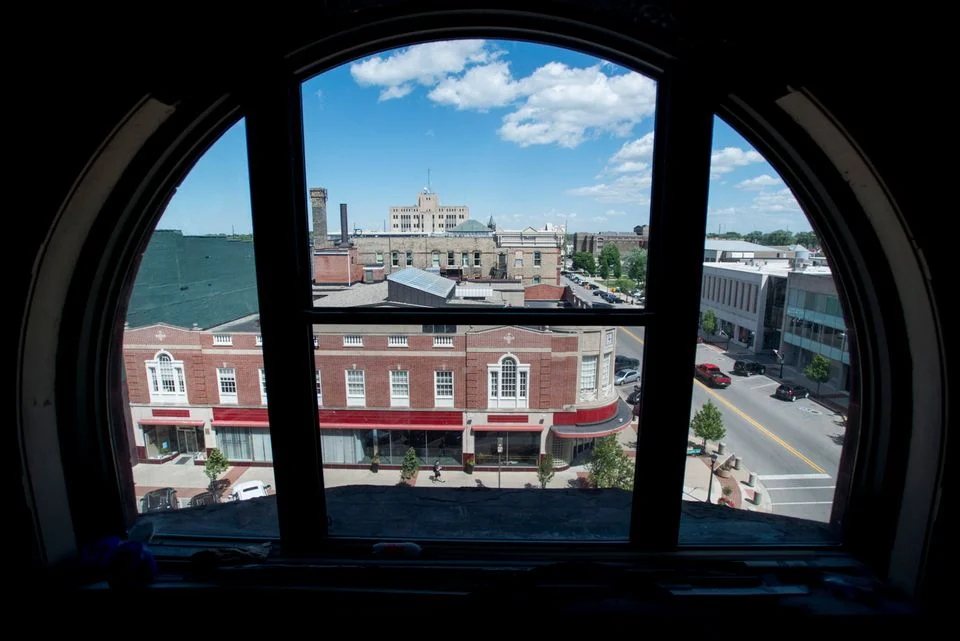
The 127-year-old building, now called The Legacy, is going to feature 26 apartments with hardwood floors, open-concepts, modern amenities and large windows -- some as tall as 9-feet -- that allow for plenty of natural light. Remnants of the former bank building are being left throughout the development, giving its residents a look into Bay City's glory days.
BAY CITY, MI -- The redevelopment of the historic Crapo building in downtown Bay City has a little more than two months to go before it's finished, but more than a handful of future tenants are ready to call it home.
The 127-year-old building, now called The Legacy, is going to feature 26 apartments with hardwood floors, open-concepts, modern amenities and large windows -- some as tall as 9-feet -- that allow for plenty of natural light. Remnants of the former bank building are being left throughout the development, giving its residents a look into Bay City's glory days.

If you want a strong town... stop with the suburban office parks please
“Can we talk about the elephant in the room?” always garners an eyebrow raise during a meeting. Especially when it comes from someone as straightforward and candid as I. There’s a look of, “Shit, if you’re holding back a thought then what in the hell could it be?”
Last week I had a coffee meeting to discuss community development with a leader of an interior design company whose niche is optimizing workplace design for businesses. As we discussed the need to revitalize downtown, encourage entrepreneurs, and how many things our city is doing right, it reiterated why I love living here. It reminded me how many amazing elements are within the foundation of this city and its values that we can build upon.
“Can we talk about the elephant in the room?” always garners an eyebrow raise during a meeting. Especially when it comes from someone as straightforward and candid as I. There’s a look of, “Umm...if you’re holding back a thought then what could it be?”
Last week I had a coffee meeting to discuss community development with a leader of an interior design company whose niche is optimizing workplace design for businesses. As we discussed the need to revitalize downtown, encourage entrepreneurs, and how many things our city is doing right, it reiterated why I love living here. It reminded me how many amazing elements are within the foundation of this city and its values that we can build upon.
But there’s a giant elephant in the room.
We’re a small town with a big ass corporation. The company could not possibly be more supportive of its desire to build and better our community. It understands the strength of this community will help bring talent to their company. It’s imperative people want to or are willing to live here if they work for this corporation.
But here comes the disconnect.
Companies are still building corporate campuses like they have for the last 50 years (link: Rethinking corporate campuses). To me, the elephant is that there’s an opportunity to have multiple corporate offices throughout town versus within a suburban office park. Albeit, a beautiful office park with cafeterias, gyms, ample surface parking, and a perfectly cultivated experience to increase employee satisfaction.
Since my coffee collaborator had not run away from me screaming yet, I hypothesized that employee happiness and engagement could be much better in a downtown setting. That I myself can be at my maximum stress level and run into a stranger or friend on the street as I dash between meetings downtown and those natural collisions can completely alter my mindset. I may see a friend and ask about their family. I may meet a stranger who appreciates my work. I may buy something from a business owner and be inspired by their hard work. The beauty is within these experiences that aren’t cultivated. Exposure increases our creative problem-solving abilities.
The Amazon RFP for HQ2 outlines their desire for a walkable urban setting with amenities and transportation. They don’t want an office park. They want employees to have parks, museums, and a riverfront out their windows and at their fingertips. There are countless articles about how Apple failed their employees by being ever so forward thinking yet designing them a giant donut they never have to leave. Can employees truly be inspired in a cultivated environment as much as they would in an urban setting?
I have no doubt there are valuable interactions at cafeterias, gyms, and coffee carts in suburban office parks across the US. However, I strongly believe there are more valuable and lasting interactions made at the small business coffee shop downtown, the entrepreneur’s restaurant across the street, and a better gift for a loved one at the local boutique.
Community is something that happens. It’s the collision of people and a shared sense of values and place. It’s energizing to interact with the community at large. Momentum by definition is the impetus gained by a course of events.