
Deciding where to invest
Lately, two things are constantly reoccurring in my life: People are asking me how they can invest in development and I keep receiving ads from Ellevest on Instagram.
Ellevest is a service that “promises to take my money and invests it for me in businesses and real estate investment trusts for a fee, giving me a return in line with markets ... “ Blah, blah, blah.
Oh, wow! So I can ship my money off to invest in a toothpaste company or 10 other far-away things and then pay someone to tell me how they’re doing? Will I ever get dividends?
Lately, two things are constantly reoccurring in my life: People are asking me how they can invest in development and I keep receiving ads from Ellevest on Instagram.
Ellevest is a service that “promises to take my money and invests it for me in businesses and real estate investment trusts for a fee, giving me a return in line with markets ... “ Blah, blah, blah.
Oh, wow! So I can ship my money off to invest in a toothpaste company or 10 other far-away things and then pay someone to tell me how they’re doing? Will I ever get dividends?
Not so much.
Here’s the thing: I’m a control freak. I don’t want to own toothpaste companies. Now I don’t mind long-term investing, but I want something tangible. I want to invest in real estate that I can see and produce quality within. And I want to support the businesses inside those buildings.
Clearly, I’m all for helping people invest in real estate. So let’s talk about how someone can invest in real estate without being the developer.
In my last blog, we talked about having “skin in the game.” That’s the idea that if you’re going to run a company or development project, that you’re as personally at risk as your outside investors.
A typical equity stake (skin) in a development project (game) is 12 to 20 percent, depending on all sorts of internal and external factors. A $1 million project with a 15 percent equity stake, for example, requires $150,000 from the equity partners.
To keep it simple, let’s say there are five equal partners at $30,000 each. They have a developer who is also willing to defer a portion of his/her fee as reassurance in the project’s performance. The returns are based on the project.
Now I can’t give you an exact metric of the projected cash flow without a specific scenario.
But I can tell you it feels damn good keeping your money in your own community and investing in its outcome. Owning a portion of the property that will make your business tenant money is a win-win.
There are development projects in the works out there with the potential for very healthy returns. I’m talking about returns three times what you’d see from a conservative stock portfolio -- and it can happen right in your community. You could drive by it with your children and grandchildren, shop at those stores, and know you’ve invested in a community that’s part of your life.
Now that’s the kind of investment I’m talking about.
-jen

Historic building undergoing restoration in Bay City
BAY CITY, MI (WNEM) -
A 127-year-old historic building is now undergoing restoration.
The Crapo Building in downtown Bay City will be transformed into a mixed-use building featuring a restaurant, offices and 26 apartments.
The project will cost $12 million to complete.
The building was build in Bay City in 1890. It's architectural character quickly became a staple of downtown.
Source: WNEM
BAY CITY, MI (WNEM) -
A 127-year-old historic building is now undergoing restoration.
The Crapo Building in downtown Bay City will be transformed into a mixed-use building featuring a restaurant, offices and 26 apartments.
The project will cost $12 million to complete.
The building was build in Bay City in 1890. It's architectural character quickly became a staple of downtown.
That all changed in the 1960s when the owners decided to renovate the building, changing the overall look of the historic building.
After the renovation the building quickly became known as the cheese grater because of its new look.
Fast forward to the present, developer Jenifer Acosta is restoring the building to its former glory.
"One of the things that I've been most concerned about for the past year is how to restore it and make it look like that white facade never existed on it," Acosta said.
She calls the project "the Legacy."
"History is really important. It's also important because this is my hometown," Acosta said.
Her goal is to keep what they can restore and recreate what they can't.
"We have to go through and basically restore all the old trim, the doors, save, label. It's very tedious," said Dave Myers, project superintendent.
When the project is complete, the newly restored Crapo building will be home to restaurants, apartments and office spaces.
The top three floors will house 26 luxury apartments and the rest of the building is reserved for commercial spaces. Their hope is to bring more foot traffic to the area.
"It's great to see the community come together to renovate this historical building and rebuild Bay City," Myers said.
Acosta said she is already seeing the impact her project is doing to the rest of the street.
"We want to see, you know, when we paint our fence our neighbors start painting their fence," Acosta said.
The building is expected to be finished in September of 2018.
Why have Skin in the Game?
Warren Buffett is generally attributed with coining the phrase “skin in the game.” It essentially means key players have a financial stake in the outcome of an investment. That if you’re going to run a company or development project, you’re personally as at risk in some capacity as outside investors.
Warren Buffett is generally attributed with coining the phrase “skin in the game.” It essentially means key players have a financial stake in the outcome of an investment. That if you’re going to run a company or development project, you’re personally as at risk in some capacity as the outside investors.
For a development project, this “skin” is typically the equity you have on the line. Capital partners always want to see the percentage of total cost. How much are you personally willing to risk? How much do you believe in this project and your ability to execute it? Because they want to understand what you are willing to personally, put into the game.
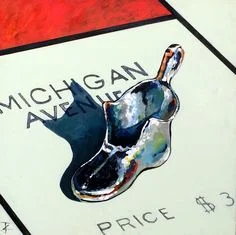
You can really tell people’s risk aversion in a game of Monopoly. This is one of the reasons I love this game.
In this board game, every player starts out on equal ground. Some are hungrier than others are and gobble up each property as fast as they can. Others will be strategic and aim for properties in proximity to one another. Some are very cautious and end on holding on to all their money. There is always that one player always strives to control the railroad and utilities. One who is most aggressive to build their portfolio and aim for the density associated with hotels.

You could play multiple rounds of Monopoly with the same players and they will have different results each time. That’s because you have at account for changing circumstances.
Strong players will be strong regardless, because they grit their teeth and find paths in the face of adversity and adapt to changing circumstance. They also usually lose most stylishly, always going out with a bang knowing they gave it their all and are confident with their decisions.
In development, these two things make or break you: Are you willing to put your money where your mouth is? Are you a strong player in the face of adversity?
-jen

What I intend to accomplish in the next 5 years
Over the last week, I’ve been asked multiple times if I plan to focus on developing within the region.
While I always keep my eyes peeled for a new project to tackle, I know one thing for sure: I'm fully committed and invested in the Great Lakes Bay Region. It’s not only where my family lives, but there are also lots of opportunities for growth.
Over the last week, I’ve been asked multiple times if I plan to focus on developing within the region.
While I always keep my eyes peeled for a new project to tackle, I know one thing for sure: I'm fully committed and invested in the Great Lakes Bay Region. It’s not only where my family lives, but there are also lots of opportunities for growth.
Developments that preserve the history, context, and sense of place that make each community unique and special are my priority. The businesses that want to begin a new venture in a property, residents that will call it home, and the surrounding business community are of utmost importance.
It’s all about how strong physical places support the lives who engage with them. There’s no shortage of ways to tweak and improve places.
Every time I have felt concerned about finding a project with the right density or scale needed to make financial sense, some property has found its way to my desk.
Each property has its own unique value proposition. It always keeps the work fresh. Even if the development process remains the same, taking two similar buildings with very different visions changes the end product.
The future is promising for our region. Here’s a peek at what I intend to accomplish over the next five years:
1. Bring another historic landmark back to life.

Yes, I know I have to finish The Legacy first. Am I a glutton for punishment? Maybe.
But there are some big projects still sitting out there in our community. Historic properties tell the story of a community's past and should be preserved -- and sometimes reinvented -- to fit the current market. So having the chance to take a 100-year-old property and give it new life for new generations to enjoy is really important.
A pivotal part of the take-it-or-leave-it equation is determining if a proposed project is worth the risk. Will the end product sustain itself in the long run?
Finding developments that maximize and elevate the community as well as make sense economically is always worth exploring,
I'm always thinking about how the dynamics are changing block to block.
How might bringing one building back pave the way for more developments or activate buildings down the road? How will each project affect the overall housing market? What companies would want to relocate or launch in the area?
It's all about the people involved. What company wants to put their brand on a space in a building? Who wants to live downtown?
Last month while having lunch at City Market, I overheard a mother shopping with her daughter run into a friend and started chatting. The mom was so proud her daughter who moved back after college, landed a great job at McLaren Bay Region, and is living in a townhouse at The Times Lofts.
These stories motivate me and make the hard projects worthwhile.
2. Create a model for missing middle housing options.

Right now in Bay City, we have too much housing for our population. But is it the kind of housing that meets our community’s needs now and into the future?
With changing demographics, including increasing numbers of households made up of young professionals and empty nesters, more housing options for a walkable urban living is critical to stopping capital flight and rejuvenating the community.
Stay tuned here for more thoughts on this important issue.
3. Heighten placemaking efforts by working with organizations, municipalities and community groups.

Placemaking is a multi-faceted approach to the planning, design, and management of public spaces. It is how streets, walkway paving, buildings, and open spaces shape the urban design structure and image as a unique place. It is how streetlights, plantings, signs, and public art complement this basic structure and contribute to the quality of the environment. By capitalizing on a local community's assets and potential, it’s possible to create public space that promotes people's health, happiness, and well-being.
By taking a holistic approach to real estate development, the overall form of these diverse elements organizes to convey a unified image, sense of vitality, and a comfortable setting for people to live, work, and play.
Spaces that encourage people to interact with their community improves the quality of life for everyone.
The next five years promise to be challenging, but exciting.
Let’s do this.
-jen

Contractors: Finding the Right Fit
Whether you’re redeveloping a five-story, historic structure or remodeling your kitchen, the secret to any successful project is the same: Building the right team.
But how do you pick the right builder or contractor to help bring your dream to life?
For me, it’s a combination of doing a lot of homework and then listening to your gut.
Developers orchestrate. We’re the jacks-of-all-trades and masters of none. That’s why building the right team is critical: You need to surround yourself with people who understand your vision and have the expertise to see it through.
Whether you’re redeveloping a five-story, historic structure or remodeling your kitchen, the secret to any successful project is the same: Building the right team.
But how do you pick the right builder or contractor to help bring your dream to life?
For me, it’s a combination of doing a lot of homework and then listening to your gut.

Transforming this property would be impossible without a shared vision among a capable team
Developers orchestrate. We’re the jacks-of-all-trades and masters of none. That’s why building the right team is critical: You need to surround yourself with people who understand your vision and have the expertise to see it through.
When it comes to construction:
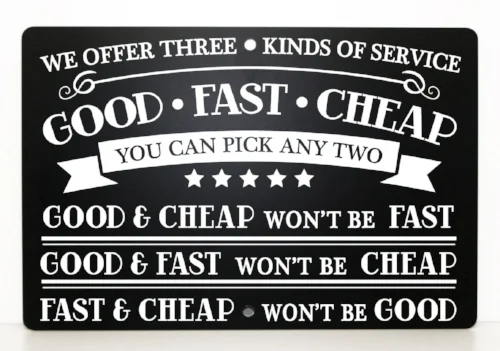
1. It can be good
2. It can be fast
3. It can be cheap
But you can only have two.
Since I always demand high-quality work, I need to sacrifice speed or cost to get a job done the way I want it. With a tight deadline, we know we’re going to have to pay more to get the work done on time. But if I have the luxury of time, then I economize where I can while still meeting my high standards.
That’s why a strong, cohesive team is especially crucial.
Long before I even sit down with potential contractors, I’m out there finding out everything I can about their companies.
Let’s say I’m considering redeveloping a historic commercial property into a residential building. I need to get a lot of answers before I commit to hiring my team: How many similar projects have they done and have they completed the job to the high standards I expect. Does the firm have experience meeting Secretary for the Interior standards for historic tax credits?
I talk to colleagues who’ve worked with them in the past to hear the real scoop. Were you satisfied with the work performed? Did they finish the job on schedule? Or did they take payment and never finish their punch list?
And then I go into stalker mode.
I visit completed projects and look them over to make sure the work meets my expectations. My favorite trick is peeking into behind-the-scenes nooks and crannies like back stairwells to assess the contractor’s attention to detail. Anyone can make the front entrance look shiny and new, right? But what about a building’s underbelly? Are those areas handled with the same level of dedication as the front foyer? Those kinds of details are telling, I believe.
Then I suggest you sit down with several contractors and show them your dream. For a commercial project, you’ll likely be showing them plans you’ve started with an architect. For a home or remodel, use visuals from magazines or Pinterest to illustrate what you love and why you love it. Have your visuals edited down to a theme and specific end product you can visualize cohesively.

A portion of the idea book where I'm collecting inspiration for my future downtown office space
Do they really listen to your ideas and make helpful suggestions for making your ideas a reality? Or do they steamroll right over you? Do you feel a rapport? A synergy? Are these people you can trust?
If you feel uncomfortable or concerned in any way, they’re not the right folks for you.
But if you find someone who syncs with you and eventually does a great job, be sure to spread the good news: There’s nothing more valuable than first-hand recommendations.
Building is not for everyone. There are plenty of people who have a new home built and swear they’ll never go through that process again.
Me? I love it. Having a clear vision and then building a team to execute it is thrilling and frustrating and challenging all at the same time.
And I wouldn’t have it any other way.
-jen

Influence: You can be indispensable or likable
Last week I posted a statement on Facebook critical of elected officials. It was pretty mild: A simple request for them to show up and serve the community boards on which they serve.
The board members had just voted to increase their pay in the coming years and my reaction was: “Great! But if you want the pay, do the work.”
Last week I posted a statement on Facebook critical of elected officials. It was pretty mild: A simple request for them to show up and serve the community boards on which they serve.
The officials had just voted to increase their pay in the coming years and my reaction was: “Great! But if you want the pay, do the work.”
I received a couple of private messages afterward from people looking out for me saying: “Don’t say that … you’ll need their support in the future” or “Careful … they might take offense to that.”
Here’s the thing: I know I’m not going to be liked all the time or by everyone -- and that’s OK. Additionally, I believe it’s perfectly fine to disagree on issues and still like one another and work well together.
I don’t want to play the “chick card” here, but I do think as women we’re conditioned against rocking the boat. I’ve watched board chairs consider every idiotic idea presented by men, but tell women who raise relevant issues that they’re “confused.”
Critical thinking is important no matter who you are and I believe women should be respected as much as men for being critical.
The way I see it, you can be likable or you can be indispensable. This is especially true in board meetings and community development work. Each time you show up at a meeting your job is to move the ball as far down the field as you can in as short a time as possible. Otherwise, you’ve wasted an hour just networking and patting each another on the back.
We've all read the magazine articles suggesting a good leader waits to speak last at a meeting so she can gauge the room and collect the data around the table before opening her mouth.
That's not me.

Image via Giphy
I choose to be indispensable. I choose progress. I'm as straightforward as they come and I do not have a lot of time.
But straightforward doesn’t mean negative. People who know me understand that I’m really pretty positive. I’m the first one to get behind a great idea or suggestion – as long as you can prove it’s worth investigating further.
Choosing to be indispensable means working to create a culture that causes momentum. In meetings, I’ll often say the most against-the-grain-comment right off the bat in order to push the discussion threshold to a nearly uncomfortable level. Does that clear the deck for a more honest discussion and lead others to dial back to a stable middle ground? Probably. Will someone say I'm out of line? Maybe yes and maybe no.
But I'm not concerned about being right. And I'm not there to be liked. I'm there to maximize my time in an honest discussion and arrive at a resolution. I definitely don’t want anyone telling me after a meeting they’re still unsure about something that was voted on. Then I’m stuck holding the information or doing something about it. My goal is to discuss all the issues at the meeting so there’s no need to continue that discussion after we adjourn.
There’s not always a need for this approach. It’s great when meetings move along and make headway, where participants can relax and build social capital with one another. But dynamic meetings are a lot more energizing because participants leave feeling accomplished.
Motion to adjourn.
jen

Entrepreneur Profiles: Jenifer Acosta of Jenifer Acosta Development
People at ULI Michigan told me I should be in touch with you! What have you been up to with the Urban Land Institute?
When I started my development firm, I took advantage of several educational opportunities through the Urban Land Institute. I also went to the Fall Meeting in San Francisco in 2015 and the bi-annual Small Scale Developer Forum in Pittsburgh in 2016. I’m also in the 2017 ULI Michigan class of Larson Leadership out of Detroit.

$1.7M renovation of Bay City building planned for startup bringing 40+ jobs
BAY CITY, MI -- A $1.7 million renovation project is planned this fall for the facade and upper floors of a popular downtown Bay City restaurant, but the bigger news could be coming after the new year.
Dave Dittenber, owner of Old City Hall, 814 Saginaw St., has announced plans to make exterior facade improvements and completely renovate the restaurant's second and third floors into warehouse-style commercial office space.